
6.王人美
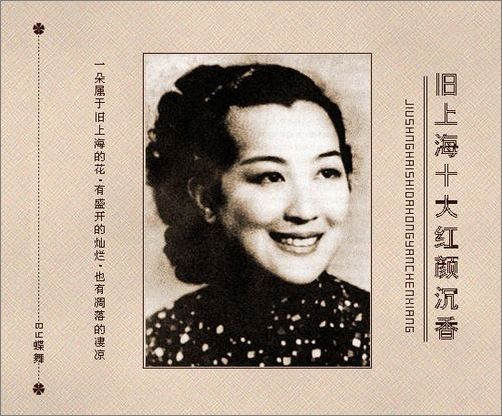
Wang Renmei was born into a scholarly family in 1914. At the age of 13, she joined the Bright Moon Troupe. The record-breaking film "Song of the Fisherman" established Wang as a household name, and her bold screen persona gained her the nickname Wild Cat. In the film, she played a character quite similar to herself in many ways. Her outgoing and bold personality was a hit with movie-goers. After her marriage to Jin Yan, also a famous film actor, her career went downhill. Her company would not renew the contract, claiming that as a married woman she could not be as popular. The pressures of the marriage also played a part in her professional decline. In 1985, Wang Renmei's memoir "My Rise to Fame and Unhappiness" about her life in the Shanghai film industry during the 1930s was published. She died after falling into a vegetative state in 1987 at age 73.
有關(guān)上海的諸多往事中,總少不了那些紅顏的影子。她們躲在歲月紅塵的深處,眼波流轉(zhuǎn),巧笑倩兮,與許多年前舊上海鮮活的景象毫無二致。
在舊上海繁 華奢靡的浮光掠影中,一個模糊的形象漸漸清晰,她就是王人美,一個在當(dāng)時以“野貓”之名而享譽(yù)影壇的明星。她主演的電影《漁光曲》堪稱百年中國電影的經(jīng) 典;她演唱的歌曲《鐵蹄下的歌女》七十多年傳唱不息;她和舊上海紅極一時的影帝金焰的婚戀至今撲逆迷離。而在晚年她總結(jié)自己一生的時候,卻把成名看成是一 生的不幸。
王人美,一個知性紅顏的傳奇人生。
在電影《漁 光曲》中,“小貓”王人美在波光萬頃的海面上撒網(wǎng)捕魚的情景已成為百年中國電影的經(jīng)典鏡頭,那片明亮的香云,伴隨著她在影片中演唱的主題歌,持續(xù)飄香了七 十余年而不衰。《漁光曲》的問世,在當(dāng)時的中國電影界引起了巨大的反響,《漁光曲》首次在銀幕上展示了那個年代中國底層勞動人民的悲苦人生。紅顏王人美, 她由此遺留下來的沉香離民間最近,離我們心情最近。
屬于上個世紀(jì)的那段美麗肯定是不能延續(xù)到現(xiàn)在,多年之后,世界沒有輪回,只是遠(yuǎn)遠(yuǎn)地還能看見那么一點熟悉的影子,嗅到一些熟悉的味道罷了。而屬于老上海的王人美,就是一那一朵花,雖有盛開的燦爛,也有凋落的凄涼。但無論如何,每走一步,都帶起風(fēng),隨風(fēng)起舞。
5.潘玉良
 潘玉良
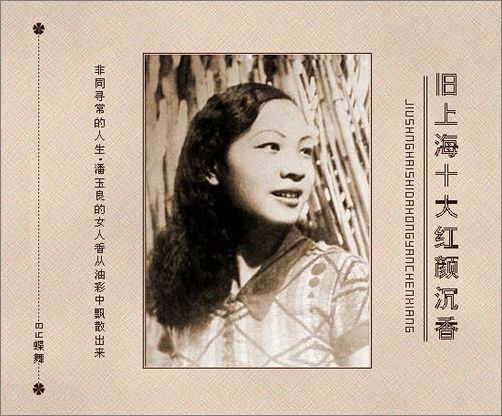
潘玉良Pan Yuliang was a female painter known in China more for her legendary life than her artistic achievements. Born in 1895, Pan was sold to a brothel at 13 where she later met Pan Zanhua, a customs official. Pan bought her out and married her as a concubine. She started learning painting from their neighbor and was admitted to Shanghai Art Institute, becoming its first female student. After studying in Paris, Pan returned in 1929 after receiving an invitation to teach at Shanghai Art School. She left Shanghai for France again in 1937 and settled down in Paris. She was selected by the overseas Chinese artists in France to be the chairman of the Chinese Art Association. She died in 1977 in Paris, and her works were sent back to China in 1985. Her works are now in a collection at China National Art Gallery in Beijing and Anhui Provincial Museum in Hefei。
潘玉良,可以說是舊上海最為傳奇的紅顏女子,她撲朔迷離的身世以及迷樣的際遇,都讓她的名字在她親手繪制的舊上海畫面上定格為一抹亮麗的色彩。
如果說黃鶯 鶯的女人香是從歌聲中流淌出來的,那么潘玉良的女人香就是從油彩中飄散出來的。從妓女到小妾到畫家,她非同尋常的人生際遇,就像一幅充滿了謎語的油畫,仿 佛帶著蒙娜麗莎般的蠱惑魅力讓人魂牽夢繞,回味無窮。而從油彩中散發(fā)出來的凝香,竟然讓一座城市、一個年代沉湎其中,久久不肯夢醒。
第一劇場播出的電視劇《畫魂》濃墨重彩地截取了潘玉良一生中最絢麗、最動人的十幾年,傳說中的才情女人潘玉良就這樣在幾十年后通過光影與我們再次親近,這或許就是我們觀賞上海灘風(fēng)情時最渴望的一抹異香吧。
電視劇《畫 魂》講述了潘玉良的那段傳奇人生:青樓出身的潘玉良十八歲后在兩位男人的幫助下走上了藝術(shù)之路,并在藝術(shù)之都巴黎登峰造極,成為享譽(yù)中西的大畫家,這絕對 是一個異數(shù),更準(zhǔn)確地說是一段傳奇。與此同時,她終其一生也都掙扎在這兩位男人和另一位女人的情感漩渦中,無意依靠卻又難以割舍,最后一個人孤獨地離世。
這就是上世紀(jì)名噪一時的旅法女畫家潘玉良,從十里洋場發(fā)軔,到藝術(shù)之都巴黎,她帶給我們的是一段攙雜了舊上海和異國風(fēng)情的不老沉香。

新浪簡介 | 新浪河南簡介 | 網(wǎng)站地圖 | 廣告服務(wù) | 商務(wù)合作 | 聯(lián)系我們 | 客戶投訴 | 誠聘英才 | 網(wǎng)站律師 | 會員注冊 | 產(chǎn)品答疑
Copyright © 1996 - 2012 SINA Corporation, All Rights Reserved


版權(quán)所有